Helicopters in Urban Warfare 2024: A Comprehensive Overview
Helicopters, vital VTOL aircraft, offer unique capabilities in complex urban environments, enabling troop transport, aerial attacks, and logistical support where fixed-wing aircraft cannot operate․

The modern urban battlefield presents unprecedented challenges, demanding adaptable and versatile military assets․ Traditional warfare doctrines are increasingly insufficient in densely populated areas, necessitating a shift towards more nuanced and precise operational approaches․ Helicopters, possessing vertical takeoff and landing (VTOL) capabilities, have emerged as crucial components in navigating this complex terrain․
Their ability to operate in confined spaces, coupled with diverse roles ranging from troop insertion and resupply to aerial reconnaissance and direct fire support, makes them invaluable․ The proliferation of man-portable air defense systems (MANPADS) and the increasing sophistication of electromagnetic warfare, however, pose significant threats․ This overview explores the evolving role of helicopters in urban warfare, examining technological advancements, tactical considerations, and inherent limitations as of 2024․
The Unique Challenges of Urban Terrain
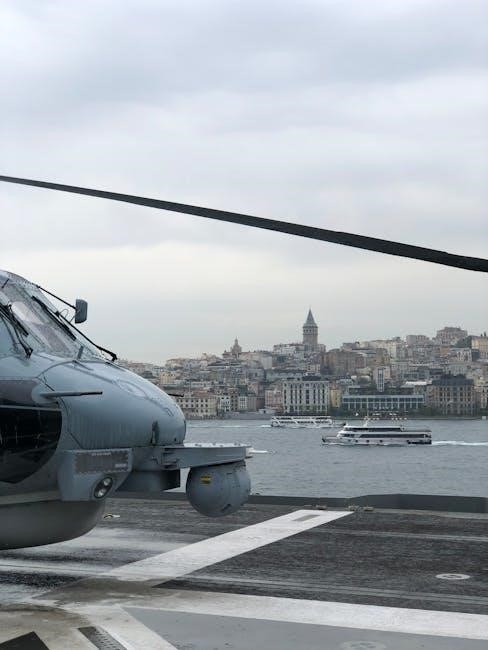
Urban environments dramatically complicate military operations, presenting a unique set of challenges for helicopter deployment․ Dense building structures create complex airflow patterns, hindering flight and increasing the risk of collisions․ Limited landing zones necessitate precise maneuvering and specialized insertion/extraction techniques․ The presence of civilian populations demands extreme caution to minimize collateral damage and maintain operational legitimacy․
Furthermore, urban canyons can disrupt communication and navigation systems, while providing ideal concealment for enemy forces equipped with anti-aircraft weaponry․ The electromagnetic spectrum is often congested, impacting sensor performance and increasing vulnerability to electronic warfare․ Successfully employing helicopters in these conditions requires advanced training, sophisticated technology, and meticulous planning to overcome these inherent obstacles․
Attack Helicopters in the Urban Environment
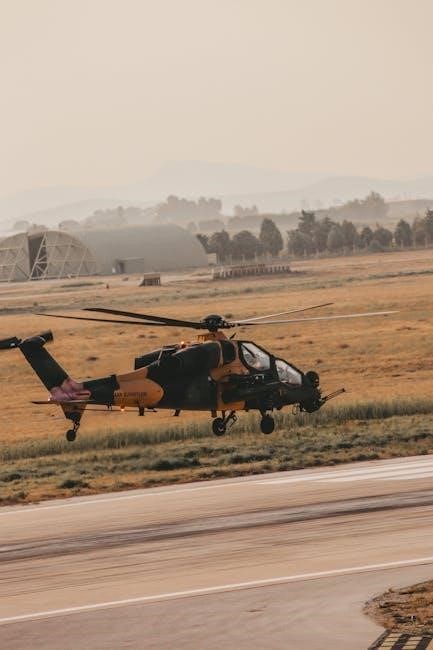
Attack helicopters deliver crucial firepower, utilizing missile launchers and miniguns to engage ground targets within the complex confines of urban warfare scenarios․
Weapon Systems for Urban Combat
The selection of weapon systems for attack helicopters operating in urban environments demands precision and adaptability․ Missile launchers, capable of engaging targets at extended ranges, are crucial for initial engagements and eliminating fortified positions before close-quarters combat begins․ However, the confined spaces necessitate the integration of highly accurate, yet lower-yield, weaponry․
Miniguns and autocannons provide suppressive fire and the ability to neutralize immediate threats, though collateral damage concerns require careful targeting․ Precision-guided munitions (PGMs), including laser-guided bombs and rockets, are essential for minimizing civilian casualties and infrastructure damage․ The integration of advanced targeting pods and sensor suites enhances the effectiveness of these systems, allowing pilots to identify and engage targets with greater accuracy, even in obscured conditions․ Ultimately, a versatile arsenal is paramount for success in the dynamic urban battlefield․
Low-Altitude Flight and Obstacle Avoidance
Operating helicopters within the urban canyon presents significant challenges regarding low-altitude flight and obstacle avoidance․ Buildings, power lines, and other infrastructure demand exceptional pilot skill and advanced technological assistance․ Helicopters must navigate constricted spaces, often requiring maneuvering between structures at speeds that minimize exposure to threats․
Modern helicopters are increasingly equipped with advanced sensor suites, including radar and LiDAR systems, to detect and map the surrounding environment in real-time․ These systems provide pilots with enhanced situational awareness, aiding in obstacle detection and avoidance․ Automated flight control systems and collision warning systems further enhance safety and precision․ Pilot training emphasizes low-level flight techniques, incorporating simulations and real-world exercises to prepare for the complexities of urban operations․ Successful navigation relies on a synergy between pilot expertise and cutting-edge technology․
The Role of Precision Guided Munitions
In urban warfare, minimizing collateral damage is paramount, making precision guided munitions (PGMs) crucial for helicopter-borne attacks․ Attack helicopters employ a range of PGMs, including guided missiles and precision-guided bombs, to engage targets with pinpoint accuracy․ These munitions significantly reduce the risk of unintended harm to civilians and infrastructure compared to unguided weaponry․
Advanced targeting systems, integrated with the helicopter’s sensor suite, enable pilots to identify and engage targets effectively, even in obscured environments․ Laser guidance, infrared homing, and GPS-assisted navigation contribute to the precision of these weapons․ However, the urban landscape can still present challenges, such as signal interference and limited lines of sight․ Careful mission planning, coupled with sophisticated targeting technology, is essential for maximizing the effectiveness and minimizing the risks associated with PGM employment in urban settings․
Transport Helicopters: Mobility and Logistics
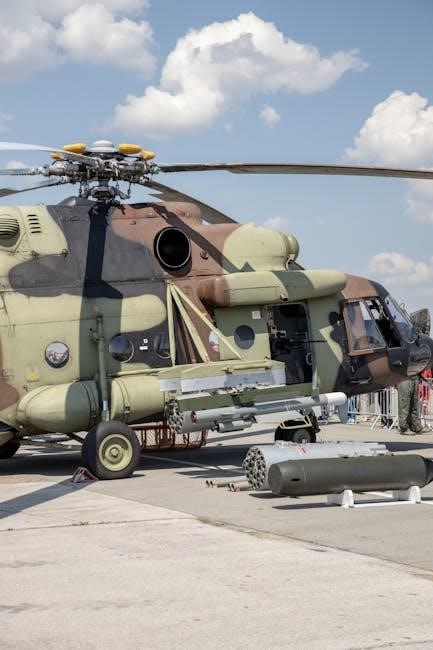
Transport helicopters provide critical troop and supply movement in urban areas lacking airstrips, offering unmatched flexibility and rapid response capabilities for military operations․
Troop Insertion and Extraction Techniques
Successful troop insertion and extraction in urban warfare demand precise execution and adaptation to confined spaces․ Techniques range from fast-roping and rappelling onto rooftops or into courtyards, minimizing exposure to ground fire, to utilizing pinpoint landings in designated Landing Zones (LZs)․
Dust and debris generated by rotor wash significantly reduce visibility, necessitating skilled piloting and reliance on advanced navigation systems․ Extraction procedures often involve rapid ascent while maintaining situational awareness of potential threats․
Coordinated communication between aircrew and ground forces is paramount, employing pre-planned signals and clear communication protocols․ Night operations require specialized equipment like night vision goggles (NVGs) and infrared sensors to enhance visibility and safety․ The ability to quickly adapt to changing conditions and unexpected obstacles is crucial for mission success and troop safety within the complex urban landscape․
Resupply Operations in Confined Spaces
Resupplying troops in urban environments presents significant logistical challenges due to limited Landing Zones (LZs) and heightened threat levels․ Helicopters excel at delivering essential supplies – ammunition, medical kits, food, and water – directly to isolated units, bypassing ground-based supply routes that may be compromised․
Techniques include pinpoint drops using specialized cargo hooks or nets, minimizing the helicopter’s exposure time․ Low-altitude, high-speed deliveries are often employed, demanding exceptional pilot skill and precise navigation․
Careful consideration must be given to rotor wash effects, which can create hazardous conditions for personnel and damage surrounding structures․ Pre-staging supplies and establishing secure drop zones are vital for efficient and safe resupply operations․ Effective communication and coordination between air and ground elements are essential for successful logistical support in the urban battlespace․
Medical Evacuation (MEDEVAC) in Urban Settings
Urban warfare dramatically increases the demand for rapid Medical Evacuation (MEDEVAC)․ The confined spaces and complex terrain necessitate swift extraction of wounded personnel to higher levels of care․ Helicopters provide the quickest route, bypassing congested streets and potential ambush points․
Dedicated MEDEVAC helicopters, equipped with advanced life support systems and skilled medical personnel, are crucial․ Landing zones are often improvised – rooftops, parks, or even streets – requiring precise maneuvering and situational awareness from pilots․
Tactics involve rapid patient assessment, stabilization during flight, and direct transport to trauma centers․ Communication with ground teams is paramount for accurate patient handover and efficient coordination․ Minimizing exposure time and maintaining situational awareness are critical for the safety of both the crew and the casualty during these high-risk operations․

Helicopter Types Commonly Deployed
Diverse helicopter designs – from versatile Robinsons to heavy-lift cargo choppers – are utilized, each offering unique capabilities for reconnaissance, transport, and critical asset movement․
Robinson Helicopters: Versatility and Accessibility
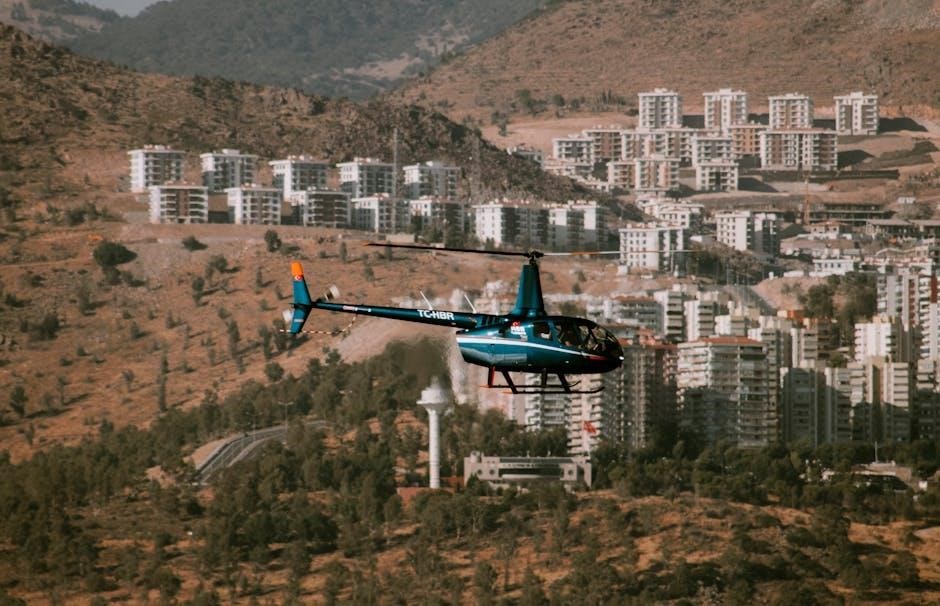
Robinson Helicopter Company has become a globally recognized name, particularly noted for its accessibility and widespread use across numerous applications․ These helicopters frequently feature prominently in critical operations, ranging from urban safety initiatives and disaster relief efforts to pilot training programs․ Their designs prioritize a balance between performance and cost-effectiveness, making them a popular choice for law enforcement agencies, air ambulance services, and private operators alike․
Within urban warfare scenarios, the Robinson R44 and R66 models offer valuable capabilities․ Their relatively small size allows for maneuverability in confined spaces, while their versatility enables them to perform a variety of missions, including observation, light transport, and potentially, supporting roles in search and rescue operations․ The accessibility of these helicopters also simplifies maintenance and logistical support, crucial factors in dynamic operational environments․
Light Helicopters for Reconnaissance and Observation
Light helicopters play a crucial role in urban warfare, primarily focused on reconnaissance and observation tasks․ Their smaller footprint allows for operation in densely populated areas and constricted spaces where larger aircraft cannot maneuver effectively․ Equipped with advanced sensor suites, these helicopters provide real-time intelligence, surveillance, and target acquisition (ISTAR) capabilities to ground forces․
These aircraft excel at gathering situational awareness, identifying potential threats, and monitoring enemy movements within the complex urban landscape․ Their quiet operation and ability to hover discreetly enhance their effectiveness in covert observation roles․ Furthermore, light helicopters can rapidly deploy to assess damage, locate casualties, and coordinate responses during dynamic combat situations․ They are invaluable for providing commanders with a comprehensive understanding of the battlefield, minimizing risks to troops and civilians alike․
Medium-Lift Helicopters: A Balance of Capabilities
Medium-lift helicopters represent a versatile asset in urban warfare, bridging the gap between the specialized roles of light and heavy-lift aircraft․ They offer a balanced combination of payload capacity, speed, and maneuverability, making them adaptable to a wide range of missions within the complex urban environment․ These helicopters are frequently employed for troop transport, casualty evacuation (MEDEVAC), and the delivery of essential supplies to isolated or contested areas․
Their ability to carry a significant number of personnel or a substantial cargo load, while still maintaining a relatively small footprint, is particularly valuable in cities․ Medium-lift helicopters can also be equipped with a variety of weapon systems for direct fire support, enhancing their utility in close-quarters combat․ This flexibility allows commanders to rapidly respond to evolving battlefield conditions and effectively support ground operations․
Heavy-Lift Helicopters: Transporting Critical Assets
Heavy-lift helicopters are indispensable for moving substantial payloads in urban warfare scenarios, where logistical challenges are significantly amplified․ These rotorcraft excel at transporting critical assets – including artillery pieces, vehicles, substantial quantities of supplies, and even prefabricated structures – to areas inaccessible by conventional means․ Their capacity is crucial for sustaining prolonged operations within a city’s confines, bypassing damaged infrastructure or heavily contested roadways;
While maneuverability is comparatively lower than lighter helicopters, their sheer lifting power allows for rapid deployment of essential resources․ They can establish forward operating bases, resupply isolated units, and extract damaged equipment efficiently․ The ability to move large components quickly provides a strategic advantage, enabling forces to adapt to dynamic urban environments and maintain operational momentum․
Technological Advancements Shaping Urban Helicopter Warfare
Advanced sensors, enhanced navigation, and robust countermeasures are revolutionizing urban helicopter operations, improving situational awareness and survivability in complex environments․
Advanced Sensor Suites and Targeting Systems
Modern urban helicopter warfare demands sophisticated sensor technology․ Advanced sensor suites now integrate multi-spectral imaging, LiDAR, and hyperspectral sensors, providing pilots and commanders with unparalleled situational awareness in cluttered urban landscapes․ These systems penetrate obscurants like smoke and dust, crucial in post-blast environments․
Targeting systems have evolved beyond basic laser designators․ Today’s helicopters employ advanced targeting pods with automatic target recognition (ATR) and precision geo-location capabilities․ Integration with networked battlefields allows for real-time target data sharing with ground forces and other air assets․ Furthermore, synthetic aperture radar (SAR) provides all-weather, day/night imaging, vital for identifying concealed threats․ The ability to quickly and accurately identify and engage targets minimizes collateral damage and enhances mission effectiveness in densely populated areas․
Enhanced Navigation and Communication Systems
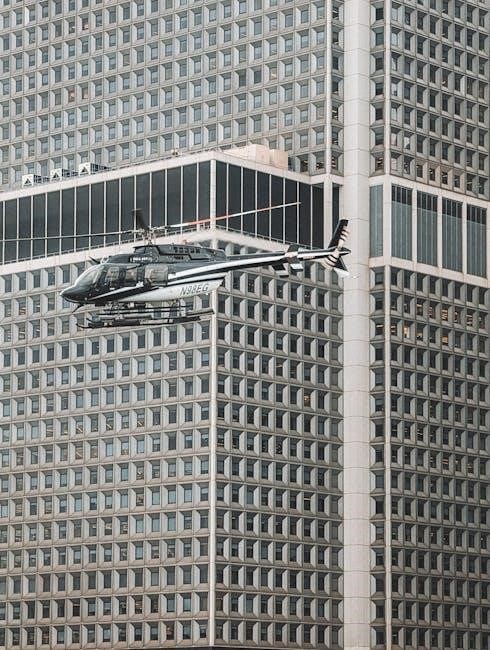
Navigating the complex canyons of urban terrain requires more than traditional GPS․ Enhanced navigation systems now incorporate inertial navigation systems (INS) coupled with visual odometry, allowing for precise positioning even when GPS signals are denied or degraded – a common scenario in urban combat․ These systems create detailed 3D maps in real-time, aiding low-altitude flight and obstacle avoidance․
Secure and reliable communication is paramount․ Modern helicopters utilize advanced data links and beyond-line-of-sight (BLOS) communication systems, enabling constant connectivity with command centers and ground troops․ These systems support full-motion video (FMV) transmission, target designation, and collaborative targeting․ Furthermore, anti-jamming technologies protect communication channels from electronic warfare attempts, ensuring uninterrupted command and control in contested urban environments․
Countermeasure Technologies Against Urban Threats
Urban warfare presents unique threats to helicopters, notably from Man-Portable Air Defense Systems (MANPADS) and increasingly sophisticated electronic warfare․ Countermeasure suites are evolving rapidly to address these dangers․ Infrared (IR) flare dispensers remain crucial for defeating heat-seeking missiles, but are now often integrated with directional IR countermeasures (DIRCM) systems that actively jam the missile’s seeker․
Furthermore, radar warning receivers (RWR) and electronic countermeasures (ECM) protect against radar-guided threats․ Chaff and jamming technologies disrupt enemy radar locks․ Importantly, systems are becoming more automated, reducing pilot workload․ Active protection systems (APS), though still developing, offer a potential hard-kill defense, physically intercepting incoming projectiles․ These layered defenses are vital for helicopter survivability in dense urban landscapes․
Tactical Considerations and Operational Doctrine
Effective urban helicopter operations demand close coordination with ground forces, minimizing collateral damage, and adapting vertical maneuver tactics to the complex cityscape․
Coordination with Ground Forces
Successful helicopter integration into urban warfare necessitates seamless coordination with ground troops․ This involves establishing clear communication protocols and utilizing shared situational awareness platforms to avoid friendly fire incidents and maximize operational effectiveness․ Pre-mission planning must detail specific landing zones (LZs), extraction points, and fire support coordination lines․
Ground forces provide crucial intelligence regarding enemy positions, potential threats like MANPADS, and civilian presence, informing helicopter flight paths and engagement strategies․ Helicopters, in turn, offer real-time reconnaissance, fire support, and rapid troop movement capabilities, enhancing ground force maneuverability․ Joint training exercises are paramount to build trust and refine interoperability, ensuring a synchronized and responsive combined arms approach within the challenging urban terrain․ Constant communication and adaptable planning are key․
Minimizing Collateral Damage in Urban Areas
Operating helicopters in densely populated urban environments demands stringent measures to minimize collateral damage and civilian casualties․ Precision guided munitions (PGMs) are essential, coupled with thorough target verification procedures to ensure legitimate military objectives are engaged․ Strict adherence to the laws of armed conflict and rules of engagement is paramount․
Helicopter crews must employ careful flight planning, avoiding overflight of sensitive locations like hospitals and schools whenever possible․ Utilizing advanced sensor suites for positive identification and employing minimum necessary force are crucial․ Post-strike assessments are vital to evaluate the impact and learn from any unintended consequences․ Effective communication with civilian authorities and transparent reporting contribute to building trust and mitigating risks within the complex urban landscape․
The Future of Vertical Maneuver in Cities
The future of urban helicopter warfare hinges on integrating advanced technologies and evolving operational doctrines․ Expect increased reliance on autonomous systems for reconnaissance, target acquisition, and potentially, even limited engagement roles․ Enhanced sensor suites and AI-powered data analysis will improve situational awareness in cluttered urban canyons․
Development of counter-MANPADS technologies remains critical, alongside advancements in electromagnetic warfare capabilities․ Urban mobility will likely see the integration of smaller, more agile helicopters, potentially even drone-like platforms, for specialized missions․ Training will emphasize realistic urban scenarios, focusing on low-altitude flight, obstacle avoidance, and coordinated operations with ground forces․ Ultimately, success will depend on balancing technological innovation with a commitment to minimizing civilian harm and adhering to ethical considerations․
Challenges and Limitations
Urban operations present significant risks, including vulnerability to MANPADS, electromagnetic interference, and demanding pilot skill requirements for navigating complex, confined spaces․
Vulnerability to Man-Portable Air Defense Systems (MANPADS)
The proliferation of Man-Portable Air Defense Systems (MANPADS) poses a critical threat to helicopters operating in urban warfare scenarios․ These shoulder-fired missiles are relatively inexpensive, easily concealed within cityscapes, and require minimal training to operate, making them accessible to various adversaries․ The low-altitude flight profiles necessary for urban operations significantly increase a helicopter’s exposure to MANPADS, reducing reaction time for defensive measures․
Urban canyons, with their numerous buildings and limited visibility, further complicate detection and evasion․ Countermeasures, such as flares and infrared jammers, are employed, but their effectiveness can be diminished in cluttered environments․ Tactical doctrines emphasize minimizing predictable flight paths, utilizing terrain masking, and employing electronic warfare techniques to disrupt MANPADS guidance systems․ However, complete immunity remains elusive, necessitating a constant assessment of risk and adaptation of operational procedures․
The Impact of Electromagnetic Warfare
Electromagnetic Warfare (EW) significantly impacts helicopter operations within urban environments, disrupting critical communication, navigation, and sensor systems․ Dense urban infrastructure creates a complex electromagnetic spectrum, amplifying jamming signals and hindering signal clarity․ Adversaries can employ EW techniques to degrade GPS accuracy, interfere with radio communications between helicopters and ground forces, and blind targeting sensors․
This disruption can lead to navigational errors, communication breakdowns, and reduced situational awareness, increasing the risk of accidents and hindering mission effectiveness․ Helicopters require robust EW protection measures, including frequency hopping radios, advanced signal processing, and anti-jamming technologies․ Furthermore, tactical doctrines must account for potential EW interference, emphasizing redundant communication methods and reliance on alternative navigation systems․ The urban landscape exacerbates EW challenges, demanding continuous adaptation and innovation in electronic countermeasures․
Pilot Training and Skill Requirements
Operating helicopters in urban warfare demands exceptionally skilled pilots, requiring specialized training beyond conventional flight instruction․ The confined spaces, low-altitude flight, and complex obstacle courses necessitate advanced maneuvering techniques and heightened spatial awareness․ Pilots must master precision landing in restricted areas, quick reaction times to avoid obstacles, and the ability to maintain stable flight in turbulent conditions created by buildings․
Simulators play a crucial role in preparing pilots for the stresses of urban combat, replicating realistic scenarios and emergency procedures․ Training must also emphasize threat recognition, including identifying and evading man-portable air defense systems (MANPADS)․ Furthermore, effective coordination with ground forces and understanding of urban tactical doctrines are essential skills․ Continuous training and proficiency checks are vital to maintain the high level of expertise required for successful urban helicopter operations․